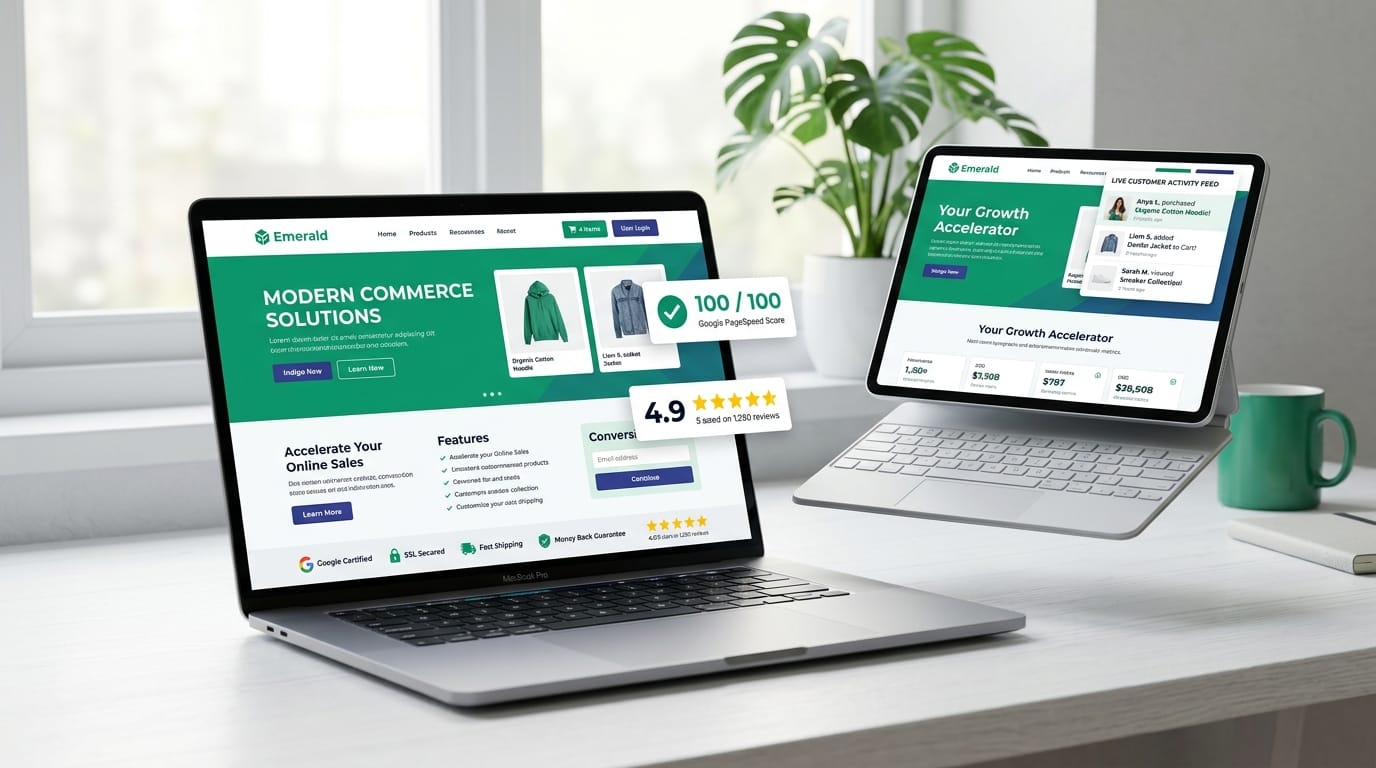
The frontend engineering masterclass for achieving green 100/100 Lighthouse scores, eliminating Cumulative Layout Shift (CLS), and achieving sub-300ms Interaction to Next Paint (INP).
Measure real user interactions before promising a speed score
Separate LCP resource discovery, layout shifts and interaction latency. Reserve image dimensions, prioritize only the actual hero asset and split heavy interactive tools from the initial route. Document device, network and cache state for laboratory comparisons.
Workflow and data ownership
Field sample → route segmentation → lab trace → targeted change → field remeasurement
Confirm each system of record, the event owner and the recovery path before implementation. The sequence above is a proposed design for discussion, not measured production performance.
3. The 8 Core Functional Modules Included in This Architecture
The custom platform is engineered with eight deeply integrated operational modules designed specifically for Frontend Performance & Speed Engineering:
Intelligent Vite / Webpack Route-Based Dynamic Import Chunk Splitting
Intelligent Vite / Webpack Route-Based Dynamic Import Chunk Splitting
Self-Hosted Variable WOFF2 Font Optimization with 'font-display
Self-Hosted Variable WOFF2 Font Optimization with 'font-display: swap'
Cumulative Layout Shift (CLS) 0.00 Elimination via Fixed Aspect Ratio Boxes
Cumulative Layout Shift (CLS) 0.00 Elimination via Fixed Aspect Ratio Boxes
Web Worker Offloading for Heavy In-Browser Calculations & Data Filtering
Web Worker Offloading for Heavy In-Browser Calculations & Data Filtering
Edge-Rendered Stale-While-Revalidate HTTP Caching Headers
Edge-Rendered Stale-While-Revalidate HTTP Caching Headers
Next-Gen Responsive WebP / AVIF Image Optimization Pipelines
Next-Gen Responsive WebP / AVIF Image Optimization Pipelines
Critical CSS Inlining & Unused CSS Automated Purging
Critical CSS Inlining & Unused CSS Automated Purging
Real-User Performance Telemetry (RUM) Tracking P75 and P95 Core Web Vitals
Real-User Performance Telemetry (RUM) Tracking P75 and P95 Core Web Vitals
Failure cases and acceptance checks
Report mobile and desktop separately. Test navigation, consent banners and delayed fonts. A fast local trace is not a field percentile, and time-to-interactive is not a replacement for current Core Web Vitals.
Scope, measurement and handover
Agree the first release, test data, permissions and acceptance evidence in writing. Record the current operating baseline before setting targets. Hand over the accepted code, configuration and runbook under the project agreement; hosting, external APIs and maintenance remain separate budget items. Review the related service or guide.