Our Technology Stack, Chosen for Real Business Impact
We don't pick technologies because they are trendy. We pick the exact language, framework, database, and cloud infrastructure that fits your workload, your team, and your long-term maintenance reality.
- Built for scalability
- Enterprise-grade security
- 100% code ownership
- Zero recurring fees
- Python & DjangoRock-solid business logic & data models
- React & Next.jsSnappy, crawlable, responsive interfaces
- PostgreSQLTransactional data & strict audit trails
- 100% Code OwnershipZero vendor lock-in
Hardened for Business
Containerized & Redundant
Zero Vendor Lock-in
Detailed Milestone Spec
Specialized Capability Models
Production Architecture Models & Stacks
Select an architectural model below to inspect the data pipelines, throughput targets, and deployment blueprints.
Enterprise Python & Django
Django 5.0 + PostgreSQL + Celery + React
Production-engineered architecture for transactional business systems (CRM, ERP, Invoicing, Portal). Includes built-in ORM, automated SQL migration management, CSRF protection, and role-based permissions.
Production Showcase
What We Build With These Technologies
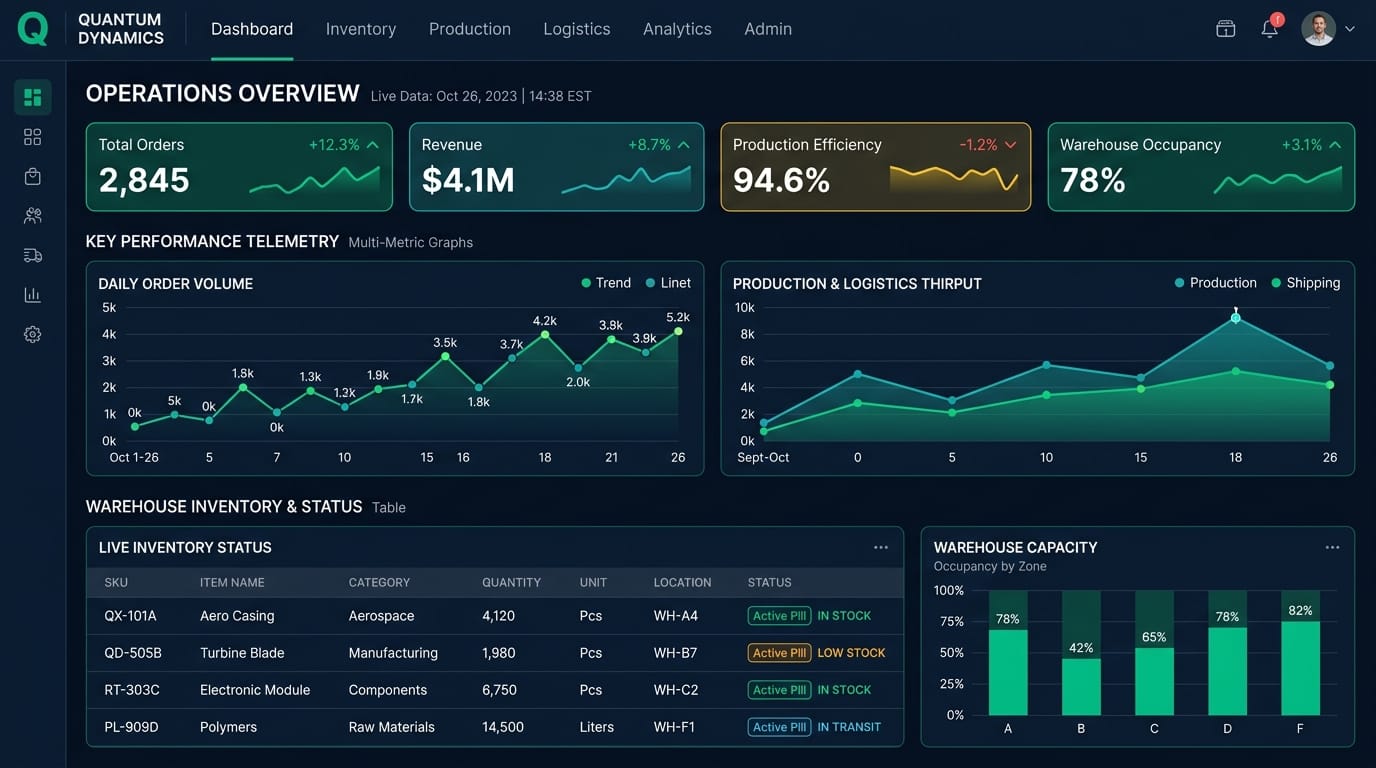
Enterprise ERP & Operations
Python Django • PostgreSQL • React

Multi-Tenant SaaS & BI
Next.js • FastAPI • Recharts • Redis

High-Volume E-Commerce
React • Node.js • Stripe • MongoDB
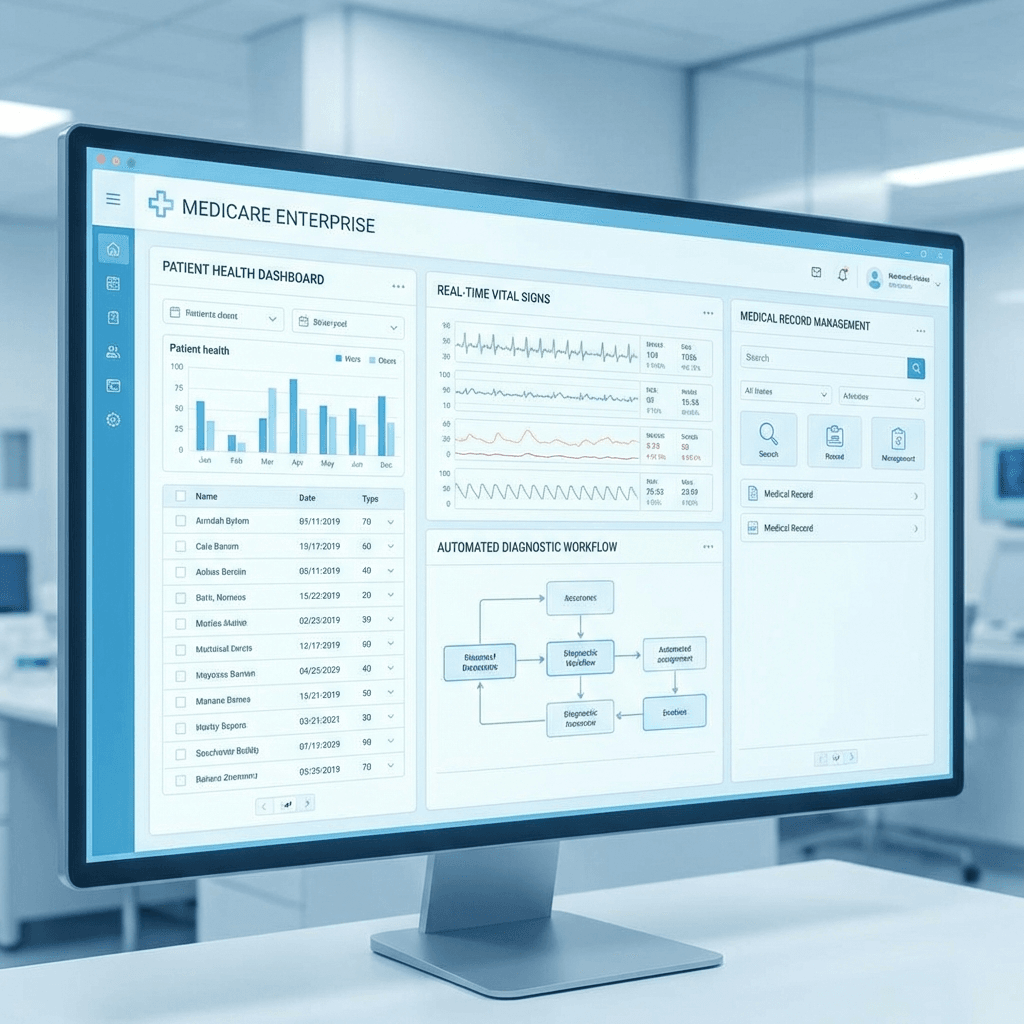
Clinical & Hospital Systems
Python • PostgreSQL • Docker • WebSockets
Technology FAQs
Common Questions About Our Tech Stack
Do I need to decide the technology stack before contacting you?
No. You tell us what business problem you are solving, who will use the software, and how often content changes. We recommend the stack that delivers the best reliability, speed, and cost efficiency, and we explain the reasoning in plain English.
Why does UbaidDev emphasize Python and Django for business systems?
Python with Django provides unmatched stability, built-in security protections (CSRF, SQL injection), structured database ORM, and an automatic admin portal. For billing, CRM, ERP, and operations systems, it is often faster to build and significantly more maintainable over 5+ years.
When do you recommend FastAPI over Node.js or Django?
FastAPI is chosen when building high-throughput REST APIs, microservices, or mobile backends where asynchronous speed and automated OpenAPI/Swagger contracts are essential. Node.js is chosen when shared TypeScript code with frontend teams or real-time WebSockets are primary.
Do we own the full source code and intellectual property?
Yes. Upon project completion and final milestone sign-off, 100% of the repository, source code, database schemas, and documentation are transferred to your ownership with zero vendor lock-in and zero recurring per-seat fees.
Can you work with our existing codebase or servers?
Yes. We frequently take over, audit, refactor, and extend existing applications built in Python, Node.js, PHP, React, and WordPress, provided they have a git history and reasonable foundation.
Will our application be locked into a specific hosting provider?
No. We package applications using Docker containers and standard environment configurations, allowing your system to be deployed on AWS, GCP, DigitalOcean, or your own dedicated server seamlessly.
Ready to choose your technology stack?
Tell us about your business problem. We'll recommend the right technology that scales with your growth.
Honest Comparison
WordPress vs custom app vs Django: trade-offs and limitations
No stack wins on every axis. This is where each approach genuinely fits, and the limitations we tell clients about before a contract is signed.
| Approach | Best for | Core tech | Main benefit | Limitations | Time to ship |
|---|---|---|---|---|---|
| WordPress | Business websites, blogs, content portals | PHP, MySQL, Gutenberg Blocks | Your team edits text, images & posts independently | Not suitable for complex multi-role business workflows | 1 to 3 weeks |
| Custom Web App (MERN) | Interactive dashboards, SaaS apps, portals | React, Next.js, Node.js, PostgreSQL/MongoDB | Lightning-fast interaction and modern user experience | Requires developer for structural content changes | 3 to 8 weeks |
| Python-Based App (Django) | Business software, CRM, ERP, Billing, Staff systems | Python, Django, PostgreSQL, React | Rock-solid data integrity, built-in admin, deep security | Heavier initial setup for simple landing pages | 4 to 10 weeks |
| Python API (FastAPI) | High-speed APIs, microservices, mobile backends | Python, FastAPI, PostgreSQL, Redis | Blazing execution speed, automatic Swagger API docs | Focused on APIs; frontend built separately with React | 2 to 6 weeks |
| HTML5 Static Site | Landing pages, portfolios, campaign sites | HTML5, Tailwind CSS, Alpine.js, CDN | Zero server cost, instant loading, near-zero attack surface | No built-in database or non-technical editing UI | 3 to 7 days |
Deeper Reading
Architecture guide articles from our blog
How these choices play out in production — what we learn about scaling, security and deployment once real traffic arrives.
Microservices vs. Modular Monolith in 2026: Pragmatic Architecture for Mid-Market Businesses
Why premature microservices create crushing DevOps complexity, distributed transaction failures, and latency bugs — and why the Modular Monolith is the gold standard in 2026.
Secure Multi-Tenant SaaS Architecture: PostgreSQL Row-Level Security, Tenant Isolation & RBAC
A comprehensive technical masterclass for SaaS architects. Compare shared-database with RLS, schema-per-tenant, and database-per-tenant isolation models with production code examples.
High-Concurrency Node.js & PostgreSQL Optimization: Scaling to 100,000+ Active Transactions
An exhaustive technical deep-dive into PgBouncer connection pooling, partial B-Tree indexes, WAL tuning, Redis cache-aside strategies, and non-blocking Node.js cluster event loops.
Definitive Enterprise API Security Playbook: Token Rotation, Rate Limiting & DDoS Mitigation
How enterprise engineering teams secure public and internal APIs against credential stuffing, token replay attacks, brute-force exploits, and unauthorized data scraping.
The Zero-Downtime Blueprint: Mastering Modern Web Deployment & Docker Pipelines in 2026
An exhaustive guide to architecting Blue-Green zero-downtime deployment pipelines, immutable multi-stage Docker builds, automated canary testing, and edge computing delivery.
Achieving Sub-300ms Time-to-Interactive: Advanced Asset Bundling & Edge Caching
The frontend engineering masterclass for achieving green 100/100 Lighthouse scores, eliminating Cumulative Layout Shift (CLS), and achieving sub-300ms Interaction to Next Paint (INP).
Let's architect your software with the right technology
We'll analyze your requirements and recommend the stack that delivers the best reliability, speed, and cost efficiency for your business.
Schedule a Technology Discovery Call