One codebase, both platforms
React Native, so a change ships to iOS and Android together.
Turn a mobile product idea into a usable iOS and Android application. Define the customer journey, backend APIs, device requirements and release scope together.
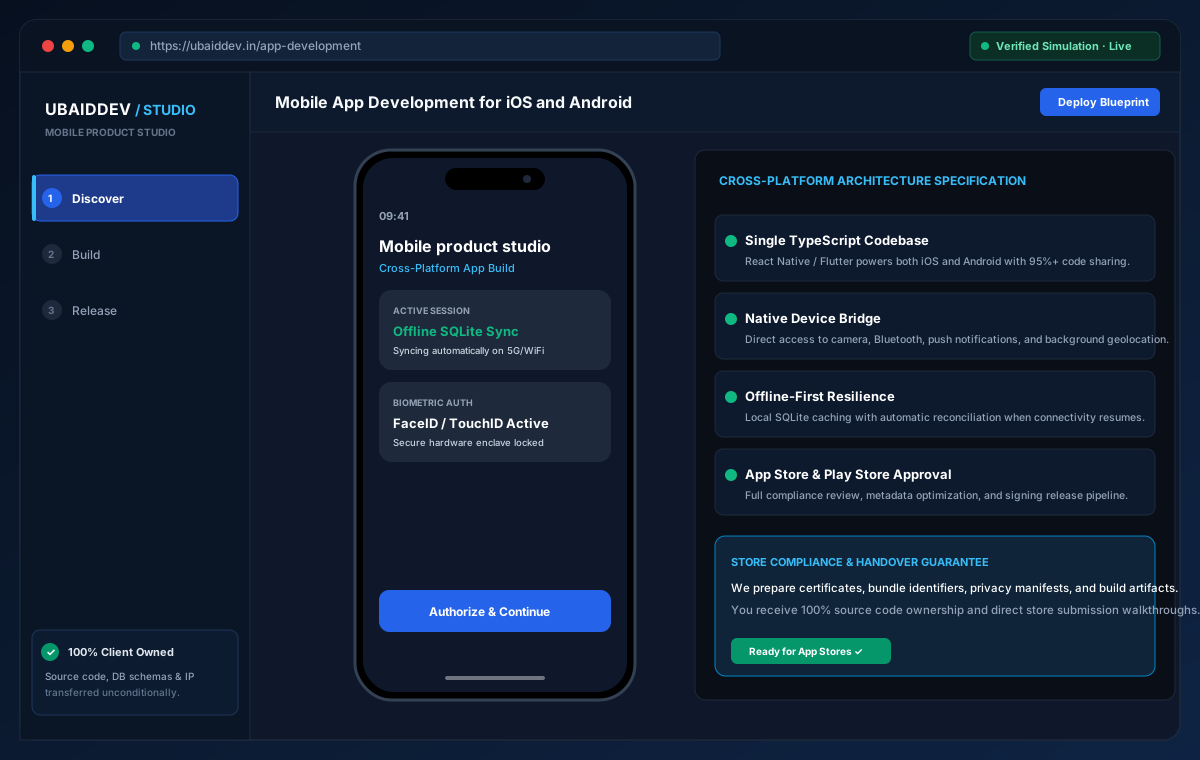
We eliminate speculative quotes and opaque management layers. Every project is scoped directly by the engineers writing the code, adhering to non-negotiable architectural standards, continuous testing, and full code handover.
Edge-distributed static assets and sub-second database query execution.
Zero single point of failure with automated health checks and container failover.
Unconditional repository, database schema, and design token handover.
Direct architecture scoping and sprint delivery without management layers.
TLS 1.3 in transit, automated backups, and zero hardcoded credentials.
Interactive operational simulation for mobile app development. Walk through the operational stages to inspect data contracts, user actions, and backend verification hooks before kickoff.
Illustrative screens and sample measurements. These are not live results or performance guarantees.
React Native, so a change ships to iOS and Android together.
Stage 1 of 3 · Discover
React Native, so a change ships to iOS and Android together.
The same API your web system uses — one source of truth, not two.
Queued actions and conflict resolution when connectivity returns.
A website wrapped in a shell and shipped as an app, which reviewers reject and users notice immediately.
Discuss your requirementsValidated entry point
React Native, so a change ships to iOS and Android together.
TypeScript
Human-visible outcome
Understand the decisions, prepare a useful brief and know what to review before launch.
An app brief needs more than a feature list. Describe the devices, connectivity, permission requests and repeat actions that shape a normal day for the user. Decide which work belongs on a phone and which is easier in a web dashboard before choosing the delivery scope.
A field worker, customer or shop owner rarely has the time to learn a complicated app. We prioritise the most important actions, readable screens, useful notifications and recovery when a connection drops. Device testing and release preparation belong in the scope from the beginning.
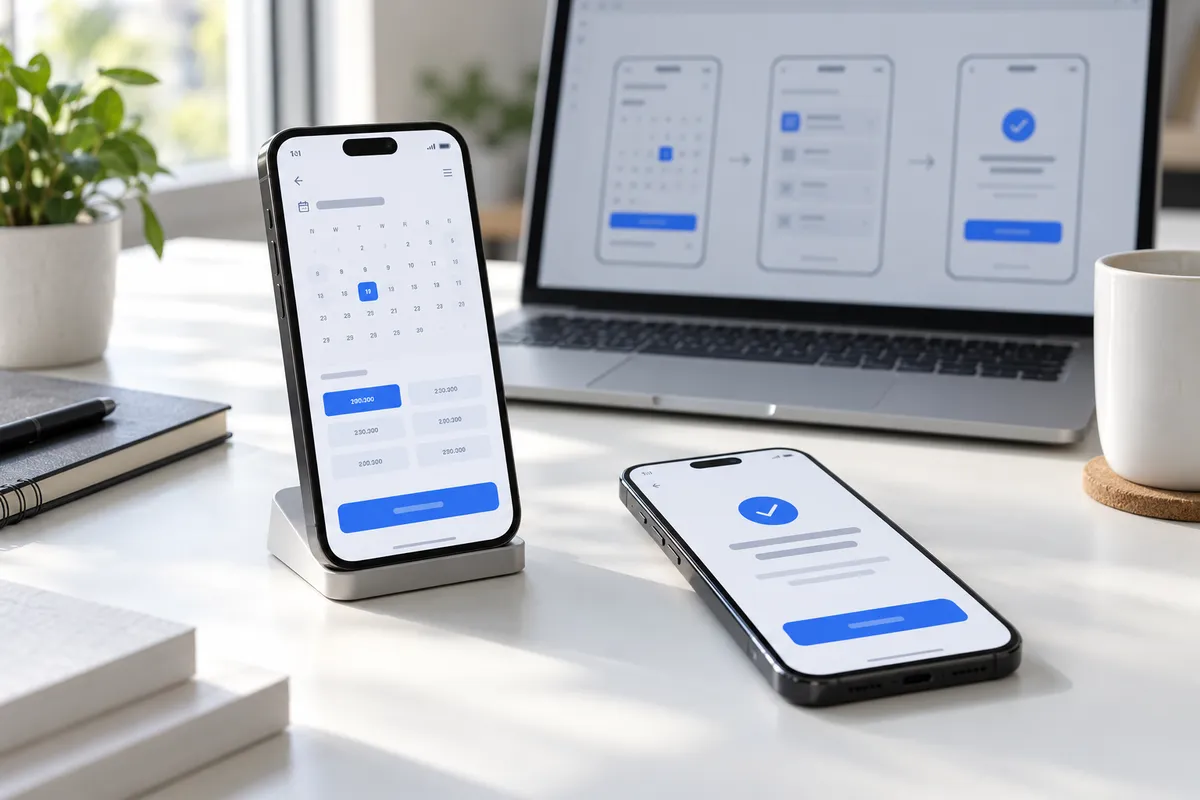
A starting point for discussion. Agree the final release boundaries during discovery.
Build the essential mobile journey with sign-in where needed, clear network states and the backend connection it depends on. Agree on supported devices and the release accounts before app store preparation.
Additional device capabilities, more user roles and expanded offline behaviour can follow after the core journey has been tested on the target devices.
A field service app might capture a visit, attach photographs and sync a report later. The useful question is what the worker sees when a connection drops halfway through, and how the office knows whether the report is complete.
Review the core journey on agreed devices, including denied permissions and interrupted requests. Define crash reporting, support ownership and account-management flows before release.
Start with the action people will return for. Decide which information must work offline, which notifications are useful and what happens when a request fails. Account deletion, permissions, accessible controls and store review requirements need attention before the launch date.
See the common operating problem, its likely cause, the business impact, and the control a custom mobile app development build can introduce. These are planning examples; your priorities and acceptance criteria are confirmed during discovery.
Recognize one of these problems?
Build an indicative mobile app development scope first. No email is required to see the range.
“A website wrapped in a shell and shipped as an app, which reviewers reject and users notice immediately.”
Zero-runtime headless architecture, Partytown web-worker execution for marketing tags, and server-side cached rendering.
Select the modules, integrations, and delivery pace that fit your situation. See an indicative range first, or send your current workflow for a human review.
Illustrative planning only · Final scope, acceptance criteria, timing, and milestone pricing are confirmed in writing.
Start with the work your team needs to improve. Agree on the workflow, the people responsible and the checks that will show whether the new system is ready to use.
Every outcome is verified against production telemetry benchmarks established during discovery before full deployment.
Where an app usually pays for itself is offline data capture — delivery proof, site inspections, stock counts — arriving in the system immediately instead of being retyped that evening.
Every later change ships to both platforms at once. Two native codebases means paying twice for every feature, forever.
Push notification reaches customers without paying for reach, which changes the economics of repeat business.
Popular Build Directions
Choose a focused starting point. Related capabilities can be combined into one scoped delivery plan.
Production apps with platform-aware navigation, permissions, testing, and store submission.
One maintainable product codebase with native device access and a shared backend.
Validate a focused product or replace a slow legacy app without losing essential workflows.
Each item below represents an engineered, verifiable deliverable—not vague marketing promises. Everything we build is deployed to your private infrastructure with container blueprints, documented runbooks, and zero vendor lock-in.
React Native, so a change ships to iOS and Android together.
The same API your web system uses — one source of truth, not two.
Queued actions and conflict resolution when connectivity returns.
With consent capture and a preference screen, as the stores require.
Camera, scanning, location and biometric unlock where the workflow needs them.
Listing assets, review requirements and the first submission handled.
Choose a delivery tier, functional modules, integrations, and timeline to see an indicative range before discovery.
Explore the range without sharing your email. We confirm the final scope and price after reviewing your requirements.
Count a complete task, such as booking, invoicing or approving a request, as one workflow.
These selections travel with your brief. The range below is calculated from the tier, workflow count, connected systems and delivery pace.
This planning range uses the selected scope inputs. Final deliverables, exclusions, and milestone prices are confirmed in writing.
This does not place an order. We review the configuration and reply with the confirmed scope and milestone proposal.
Describe the workflow you are trying to fix and we will reply with the smallest build that solves it — including what we would leave out of phase one and why. If an off-the-shelf tool is the better answer for you, we will say so instead of quoting.
Delivery Roadmap
Whether this needs to be an app at all. Honest answer first.
Platform conventions respected rather than one layout forced onto both.
Milestone builds installable on your own device throughout.
Store listings prepared, review feedback handled through to approval.
Scope Levers
Nothing here ships as a fixed package. Delivery opens with "Decide" — Whether this needs to be an app at all. Honest answer first — and that is the step where the scope below gets decided with you.
6 areas make up this build. Which of them you need, how deep each goes, and what ships first is set per client — we customise the depth rather than charging for shelfware.
Where your team already has tooling, the build fits it instead of replacing it. These are the defaults we start from, swapped when your environment calls for something else.
There are limits to what we will bend, and they are listed under “when this is the wrong service to buy” below.
Concrete artefacts, source code, and configurations owned 100% by you on delivery.
Cases where we would tell you not to spend the money, or where a cheaper tool fits better.
Commercial Terms
No retainer minimums, no discovery fee, and no proposal that hides the price on page nine. These terms are the same for every project on this page.
Scope is priced before work starts and billed per completed milestone. No hourly meter and no invoice you did not see coming.
Repository, database and hosting accounts sit in your name from day one. Stopping work never costs you access to anything.
We sign first, then you send exports, screenshots or credentials. Nothing becomes a public case study without written approval.
You talk to the person writing the code, not an account manager relaying your requirements second-hand.
Direct Answers
React Native for most business applications: one codebase, near-native feel, and a change ships to both platforms at once. Fully native is the right call for heavy graphics or deep OS integration, and we will say so if that is your case.
If you need offline use, the camera, background location or push, an app is justified. If not, a responsive web build is cheaper, ships sooner and needs no install. We answer this in the first call, before anything is quoted.
You do. We publish under your Apple and Google accounts so the listing, the reviews and the ability to ship updates stay with you.
Rejections are normal and usually about metadata, permissions or account deletion requirements. Handling the review cycle through to approval is part of the work, not an extra.
Bangalore, India — published to the App Store and Google Play under your own accounts.
Choose your next step
All three go to the same small team. None of them puts you on a mailing list.
Projects rarely stop at Mobile App Development. These are the adjacent capabilities most often folded into the same delivery plan.
Share your current operational bottleneck and target timeline. We reply within 24 hours with an architectural blueprint, scope range, and fixed milestone pricing.
Get a Fixed Quote